Keep the review surfaces coordinated
Preserve geographic context as a review moves from the global map through filters into country spectrum information and the detail matrix.
Project
An interactive, map-first interface for reviewing wireless spectrum and power information across global markets.
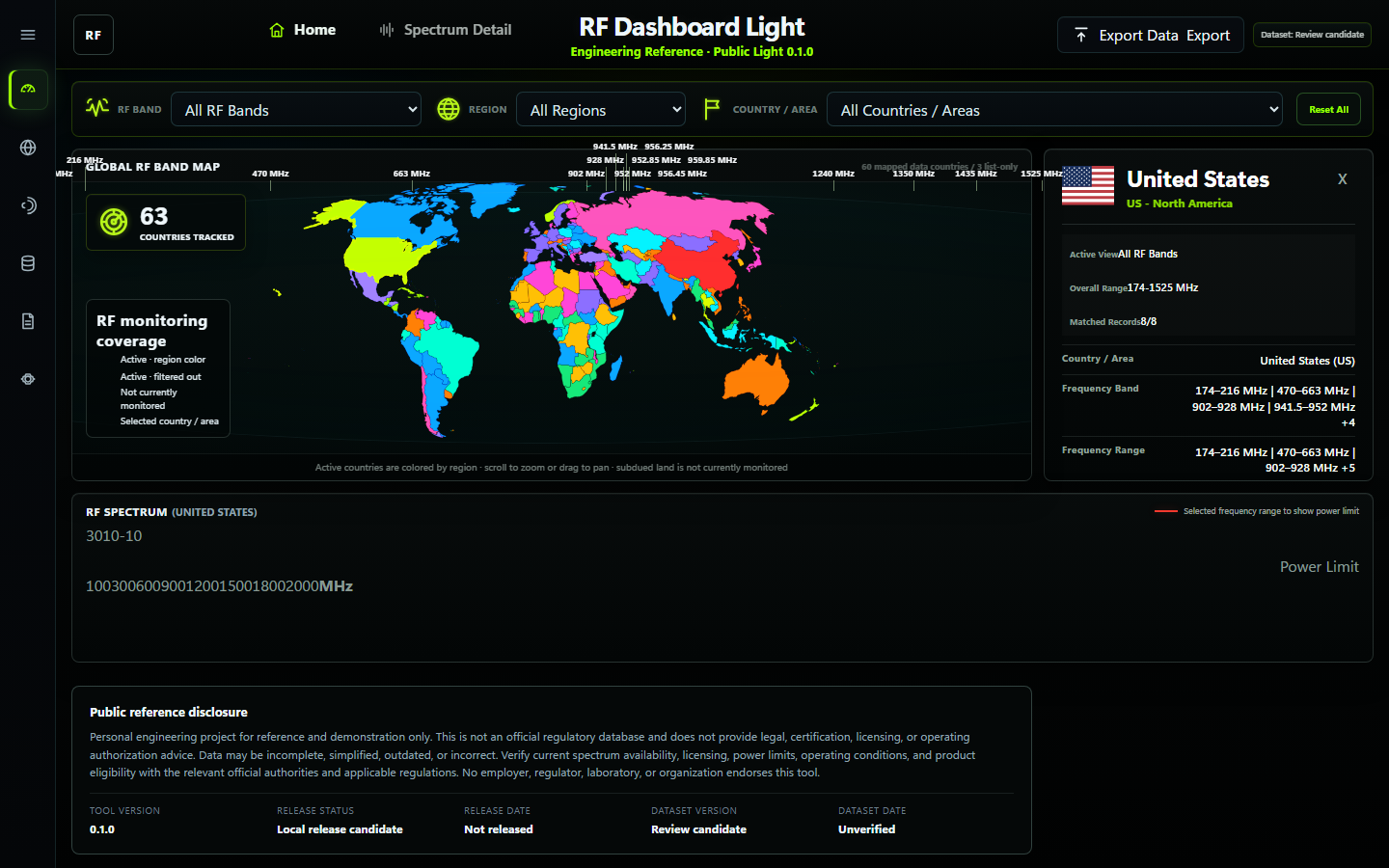
RF Dashboard Light 0.1.1 is a sanitized public release that brings regional spectrum ranges, country-level review, filtering, and power context into one coordinated engineering reference. The standalone tool is available through the public action on this page.
Regional spectrum information is difficult to compare consistently across markets, and a public portfolio record cannot expose internal workflow material or imply official regulatory completeness. The interface must keep geography, frequency ranges, power context, data limits, and release status understandable while remaining explicit that official requirements still need independent verification.
The candidate remains a self-contained static HTML tool with no runtime external dependencies. Map selection, region and country filters, RF-band filtering, spectrum information, and the detail matrix are driven by one reviewed public dataset, while the editorial case study stays separate from the standalone tool and its future deployment path.
Preserve geographic context as a review moves from the global map through filters into country spectrum information and the detail matrix.
Regenerate the retained interface data from a controlled sanitized structure instead of exposing duplicated source representations or internal fields.
Use authentic local screenshots in the editorial case study without treating portfolio evidence as a deployed tool or a live-preview destination.
One static HTML candidate carries its reviewed data and interface assets without runtime external dependencies.
A sanitized subset retains the fields required for public reference behavior while withholding unreviewed records and internal material.
Map-first navigation and region or country filters keep location visible throughout the review.
Frequency filters, country information, and the Spectrum Detail matrix share the same reviewed public records.
Visible limitations remain part of both tool views, and CSV output is restricted to seven reviewed public fields.
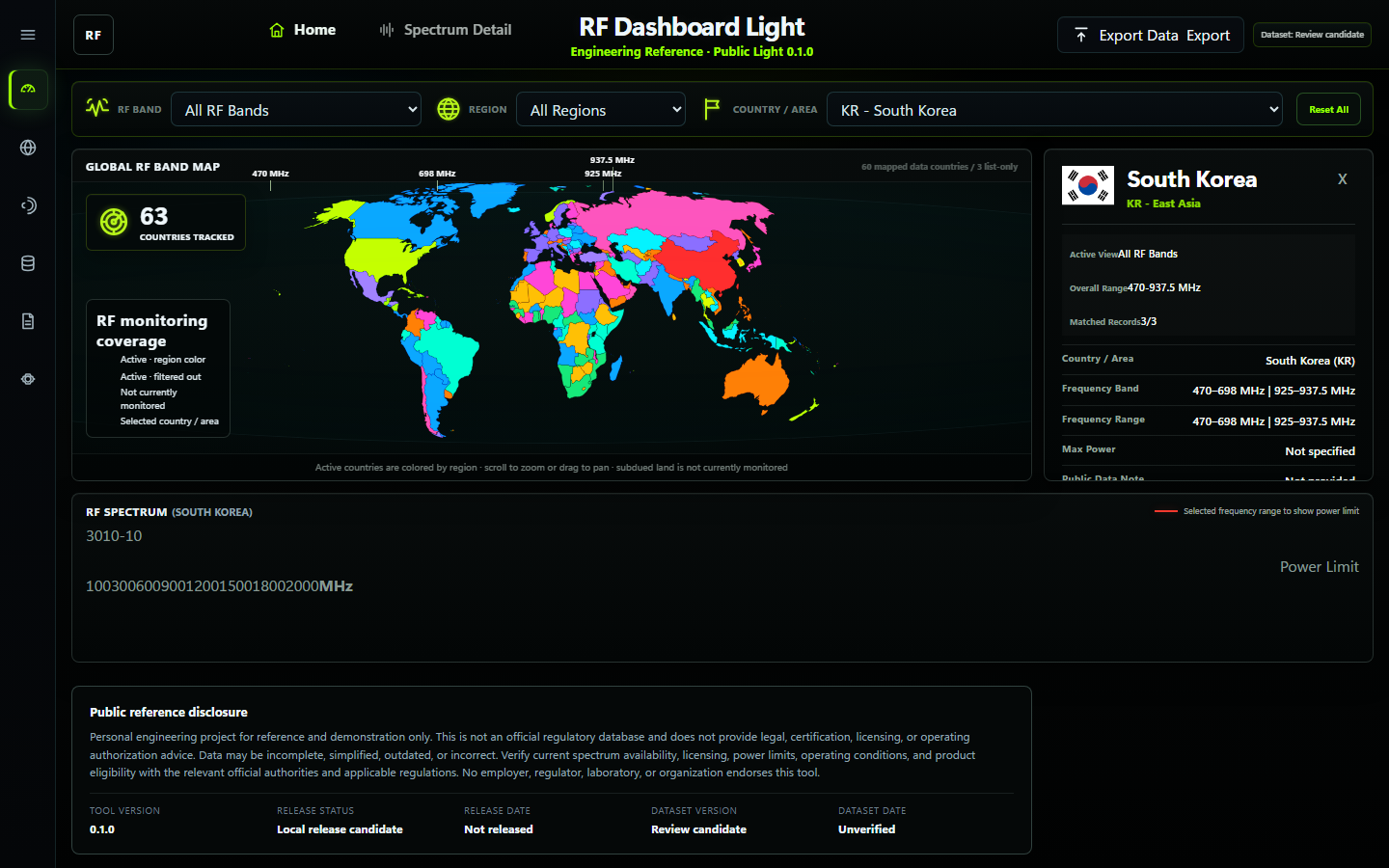
This state is evidence of the current interface, not a claim of global regulatory completeness.
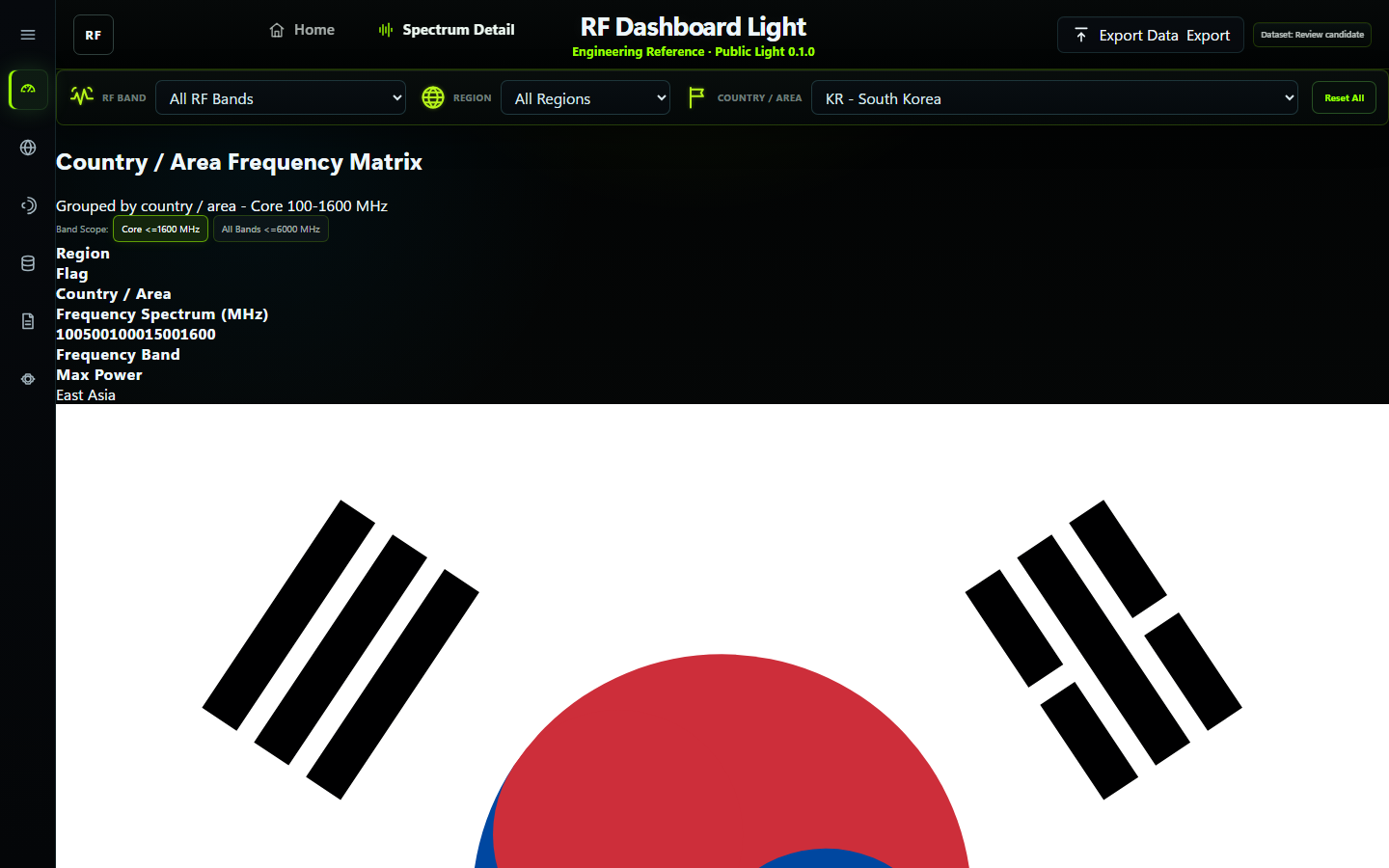
The oversized flag and incomplete row layout are retained as an unresolved candidate UI issue; the evidence has not been visually corrected.
RF Dashboard Light 0.1.1 is available as a public-safe public release. It retains 175 reviewed records from 245 source records, remains desktop-first, and has no runtime external dependencies. The screenshots document the reviewed interface, including an accepted Spectrum Detail row-layout limitation.